
Introduction:
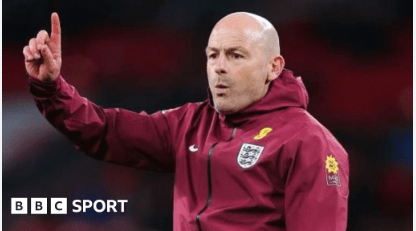
A new generation of managers is entering international football and redefining conventional work delivery methods. One can cite the examples of Gareth Southgate from England, Lionel Scaloni from Argentina, and Luis de la Fuente from Spain. Each has given his national teams a unique contemporary look focused on youth, tactical innovations, and emotional intelligence. The question is whether England can embrace the emergent paradigm that de la Fuente and Scaloni have led, either under Gareth Southgate or in the future.
Luis de la Fuente: Development in Spain
In 2023, Luis de la Fuente became the new head coach of the national team of Spain, as a successor of Luis Enrique. De la Fuente, who spent years in the Spanish football system, particularly with Spain’s U19 and U21 sides, where he oversaw the development of some of the nation’s greatest stars, is seen as a manager pretty rooted in developing talent. His approach is based on persistence, forbearance, and long-term growth. In contrast to the very often showy strategies entangled with Spain’s tiki-taka history, de la Fuente’s approach is much more flexible and practical.
In method, de la Fuente’s approach is a mix of tradition and progress. He continues in the steps of Spain’s hold control powers, making the team’s swift, vertical offense less predictable. His experience coaching young athletes is turning into solid relationships with the new wave of talent, gaining trust and allowing young talent to improve.
The national team, under De la Fuente, has thrived on the very concept of reassembling a team to compete for major honors within the arena of technical football framed by the ethos of Spanish football. This will be a benchmark by which managers are hold; many national teams now look for this in managers.
Argentina’s Pragmatic Tactician, Lionel Scaloni:
Lionel Scaloni’s time as Argentina’s manager is one of the most astonishing tales of triumph in sport. Even when announced as the successor to replace Jorge Sampaoli’s dramatic resignation in the wake of a disastrous 2018 World Cup, few thought he was an unlikely appointment, for being inexperienced and unproven. But he soon proved his managerial skills, transforming Argentina into the most cohesive team on earth and then winning the Copa America in both 2021 and 2022 during the FIFA World Cups.
Man-management and practicality are Scaloni’s strengths. He doesn’t go for a strict tactical system but rather adapts it according to the strength of his team and the weakness of his opponents. His Argentina side is often regard as playing direct attacking football but also knows how to withdraw and soak up the pressure at times. Scaloni is aware of the need to achieve a balance between youth and experience: looking at developing players like Julián Álvarez and Enzo Fernández while awarding veterans like Lionel Messi to grow.
Scaloni is the manager who best answers this question, though, because of his emotional intelligence. He can get the finest performance out of Messi and his colleagues, thanks to the strong sense of team spirit and familial environment that he has nurtured within the squad. Scaloni’s success also speaks of a shift in emphasis from tactical innovation to emotional connection and adaptability.
The New Coach of England, Gareth Southgate:
Becoming England’s head coach in 2016 has seen the fortunes of the national team change for Gareth Southgate. Even before his appointment, the golden generation of England did not live up to their potential and often buckled at the tournaments. Besides a winning performance on the field for England, Southgate has created an attitude with the national team.
Under Southgate, England has abolished the outdated, traditional defensive, counterattacking football and shifted to a more modern, possession-based style of game. His tactics reveal a great stress on grooming young people as he has included players such as Jude Bellingham, Phil Foden, and Bukayo Saka in the national team. Like Scaloni, Southgate has also made a great deal of effort to create a right, cohesive atmosphere that not only produces good mental hygiene but also team spirit.
Although Southgate has taken England to the semifinals of the 2018 World Cup and the Euro 2020 championship, coaching style has always been the bed on which the criticism of his being tactically very conservative in critical matches is sewn. For ages now, it has been believed that he is the reason why England performs below par in certain games since he must always utilize defensive formations, especially against the stronger team.
Can England follow the Scaloni and De la Fuente templates?
In the context of modern-day international management, Scaloni and De la Fuente stand at two opposite poles. De la Fuente believes in more planning for the future, investing in youth, and tactical flexibility within a nation’s identity but ultimately succeeds with Scaloni’s pragmatic views, control of emotions, and adaptability.
Southgate’s England has already deployed features of both strategies. Robust man-management and the creation of a happy atmosphere are more synonymous with Scaloni’s strategies, while de la Fuente is mirror by youth orientation and unit cohesion.
Southgate’s England hasn’t fully invested in all of these coaches’ theologies, though. For example, at times it is blaming for being less adventurous than Scaloni’s Argentina. England could take a page out of Scaloni’s playbook in terms of fluidity and formations to switch and change mid-game as if to survive past the group stage of the World Cup. And De la Fuente, in the development of talent based upon a peculiar national style of play, has something different and contrary to Southgate’s occasional about of tactical timidity.
Future of England:
If Southgate remains in place, or there are other managerial appointments, then the wish list on this side may need to be slightly relaxed and more pragmatic if England is to fully follow the blueprint set by de la Fuente and Scaloni. Tactical flexibility, balanced with a possession game, may have to come on board along with the need to change strategies on the fly if the opposition demands it—something Scaloni has done well.
Secondly, England can continue investing in long-term football philosophy and emulate de la Fuente to bring a much-needed national style across each age group. Ultimately, it will all boil down to a perfect tactical progress-governing emotional management in the hands of England. Depending on how long Southgate or his successor has an impact on how England reacts to the evolving subtleties in international football, that will determine whether the team is destined to shine in the global arena.





BBC Investigation on Spotlight: MasterChef’s Gregg Wallace Under Fire
Introduction:
Claims that, in 2018, the MasterChef TV personality Gregg Wallace made improper comments of a sexual nature to a female colleague of the BBC whom he was then a boss sparked him into a media storm in October 2024. According to reports, she said the way Wallace spoke about his sex life with his wife and allegedly undressed before the employee who would later become his co-worker on his previous program Inside the Factory.
BBC Investigation:
The BBC looked into the allegations back then. He denied it vigorously on Instagram, from whence he countered the sudden attention that had befallen him with the simple, straightforward reply that the BBC had investigated in minute detail years ago and concluded that the statements made by him had no sexual intent. Wallace said he never had been prosecuting for such inappropriate behavior or flirting, neither when the first occurrence surfaced nor later on.
In a deflating attempt to defend himself, Wallace highlighted his dedication to his marriage with Anne-Marie Sterpini by boldly stating he had “never” done anything inappropriate with anyone but was “madly in love” from their first date. Wallace continued that the only reasons he was taking so long to speak on these charges were to clear his name and protect his marriage to his wife, who would otherwise be influenced by unfounded gossip.
Wallace’s 2023 Resignation:
The timeline of these claims overlaps with Wallace’s 2023 resignation from Inside the Factory, which he claimed was the motivation to put his family first and foremost and, specifically his autistic son Sid. Wallace has never been too secretive about being a dad, and he certainly told everyone this had nothing to do with his decision to quit the show.
The media has been revisiting the allegations, but the public declaration by Wallace was an effort to clear himself off and inform the viewers that the BBC long cleared the allegations. Though there is no proof to support the claims of bad behavior by the presenter, he has expressed his concern about the recurrence of the charges and the deterioration of the public image. He is keeping his focus on the family.
Conclusion:
In 2018, allegations surfaced that MasterChef TV personality Gregg Wallace made improper sexual comments to a female colleague at the BBC. The BBC conducted an investigation and Wallace denied the allegations, stating that the BBC had concluded there was no sexual intent. Wallace also emphasized his dedication to his marriage and his resignation from Inside the Factory in 2023 to prioritize his family, particularly his autistic son. Wallace has been addressing the allegations to clear his name and protect his public image while focusing on his family.